vport

15 posts tagged with "Live Events"

Live event coverage and streaming

View All Tags

The Economics of Electronic Music Festivals: What 233 Million Viewers and 400,000 Tickets Tell Us

· 8 min read

Tomorrowland issued 400,000 wristbands in 2026. The same festival logged 233 million livestream views.

Both figures come from the same reporting, and the distance between them is the most useful number in electronic music festival economics right now. IQ Magazine and Pollstar put the livestream total at a record 233 million across YouTube, TikTok, Facebook and Instagram, up from 193 million in 2025. The gate was 400,000 people, 16 stages, 500 plus artists, 200 plus countries. Divide one by the other and you get roughly 580 remote viewers for every person who got through a turnstile.

That is not a marketing stat. It is a supply constraint, and it quietly sets the terms for how every festival, promoter and artist in this genre earns.
Live VR Concert Streaming: What Changes When the Room Is Happening Right Now

· 7 min read
CEO

The best hour in a Berlin basement is usually the one where the DJ stops introducing ideas and starts taking them away. Just sub-bass and a vocal fragment looped until it means something different than it did an hour ago. That hour tends to land around 4am local, which is when most of the planet is asleep or at work.

Open VPORT in Vancouver at 7pm on a Friday and you might find a card wearing a Live badge, the line underneath telling you the set started 23 minutes ago and which city it is running in. Teleport in now, while the room is still deciding what it wants to be. Or wait and take the finished recording next week.

Those are not the same product, and almost nobody explains the tradeoff before you pick. So here it is.

How AI Search Is Changing Live Music Discovery

· 6 min read
CEO

Fans no longer discover live music through one channel. A recommendation might begin in a search engine, a map, a ticketing app, a social post, or an AI-generated answer. For promoters and venues, that makes accurate, current event information more important than ever.

The practical response is not a new category of “AI optimization.” Google says the same foundational SEO practices apply to its AI features, with no special markup or additional technical requirements. The useful work is familiar: publish helpful information, make it easy to crawl, keep important details in text, link pages clearly, and ensure structured data matches what visitors can see.

Your Room Is the Asset: The Business Case for Filming Your Nights in Spatial Video

· 7 min read
CEO

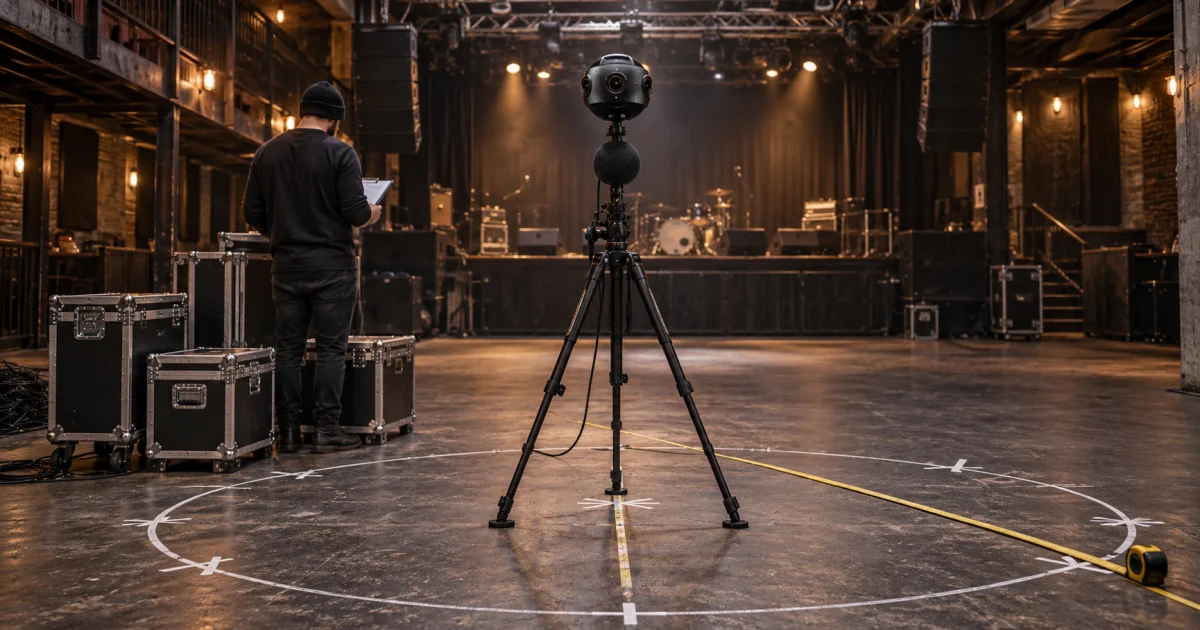
An unbranded stereoscopic 360 camera and ambisonic microphone positioned on a measured capture circle in an empty fictional music venue

AI-generated editorial image of a fictional venue capture workflow. It does not depict a real venue, event, artist, VPORT production, or partnership.

Last call lands at 4am. The lights come up on 600 people who have been inside a 3 hour closing set, and 20 minutes later the room is a floor covered in cups. Whatever happened in there now exists as maybe 40 vertical phone clips, shot at chest height, audio clipped into distortion. The promoter paid the booking, the rider, the security, the sound engineer. What they own the next morning is a bank transfer and a hangover.

That is the part of this business I keep coming back to. A venue builds a night for months. It runs once. Then it is gone, and the only durable record belongs to whoever held their phone up. Spatial video changes what a room walks away with, and the argument for it is not a romantic one. It is an asset argument.

After the Festival: The Room That Sold Out Without You

· 6 min read
CEO

On Friday July 31, an open-air electronic music event runs at Burgess Park in south London. Its ticketing page listed entry from £50 and the Friday date as sold out. The Saturday session at the same site was still on sale when we checked on Monday July 27, and the official event pages did not announce a livestream for either day.

That is the whole story, and it is a more interesting one than it looks. A field in Southwark has a fence around it, the fence has a number attached to it, and once that number is reached the event is complete. Everyone who wanted in and did not move fast enough is holding a browser tab and a sold out sign.

Amsterdam Electronic Music Venues: Why the Room Matters in Spatial Video

· 5 min read
CEO

Amsterdam's electronic music identity is tied to its rooms. A circular former gasworks, an industrial shipyard, a basement under a waterfront tower, and temporary spaces across the city can each make the same track feel different.

That is why Amsterdam is an interesting subject for spatial video. The format can preserve more than a view of the performer. It can record how architecture, lighting, audience movement, and sound work together inside a venue.

Beyond the Festival: Why Club Nights and Warehouse Sets Belong in 360

· 5 min read
CEO

Picture a converted warehouse late at night. The room is compact, the lighting is minimal, and the DJ is close to the dance floor. It is a different experience from watching a distant festival stage. That physical density and directness deserve a larger place in the conversation about virtual reality music events.

We have been thinking about this for a while at VPORT. Early conversations around spatial video and 360 concerts often focused on festivals, and the reasons make sense. Festivals are visible. They have recognizable names. The main stage provides a clear camera position and a sightline that translates to a headset without much explanation. Clubs offer another side of electronic music: smaller rooms, longer-form programming, local scenes, and the relationship between a venue and the people who return to it.

Spatial Video for Events: A Promoter's Production Checklist

· 7 min read
CEO

Spatial video for events can preserve parts of a room that a conventional edit leaves outside the frame. It can also multiply a production's complexity. The format, camera position, audio workflow, performer permissions, audience notices, post-production path, target device, and distribution plan all affect whether the finished recording is useful.

That makes the first question less exciting than choosing a camera, but more important: what should the audience be able to experience when the project is finished?

This checklist helps promoters, venue teams, and production partners answer that question before doors open. It does not assume a particular camera, platform, business model, or VPORT feature.

The VPORT Artist Portal: Build Your Profile, Reach the Front Row

· 6 min read
CEO

It is 2am in Berlin. A melodic techno headliner is 90 minutes deep at a Kreuzberg club, the kind of room where the low end lives in your chest and nobody has glanced at a phone since midnight. That set deserves a home online that sounds as good as the room felt. The VPORT Artist Portal is where it gets one.

An eligible account can create a public artist profile, add imagery and platform links, and surface performances associated with that artist in VPORT. We built it for producers and DJs whose work deserves more context than a 30-second clip.

Virtual Festival Experience 2026: A Verification Checklist Before You Watch

· 6 min read
CEO

Searching for a virtual festival experience in 2026 can produce a confusing mix of official livestreams, scheduled premieres, old replays, short highlights, fan uploads, and articles describing formats that may not be available for a specific event.

The safest rule is simple: a festival poster, recap, or platform mention is not proof that a stream exists. Treat a viewing option as confirmed only when a current public listing names the event, date, territory, format, and access requirements.

This checklist helps you verify those details before you arrange your evening, buy access, or set up a device.