vport

10 posts tagged with "Thought Leadership"

Industry analysis and forward-looking perspectives

View All Tags

Getting Paid to Teleport Fans: How Artists and Creators Earn on VPORT

· 7 min read
CEO

The live music industry has a capacity problem it does not like to talk about. Pollstar has reported for years that physical capacity is the binding constraint on the majority of headlining tours. A room holds what it holds. When a set sells out, every fan past the last ticket is simply told no, and the artist earns nothing more from a night that could have reached ten times the crowd. The electronic music economy alone is worth around $12.9 billion and still growing, and almost all of it is capped by the size of a room.

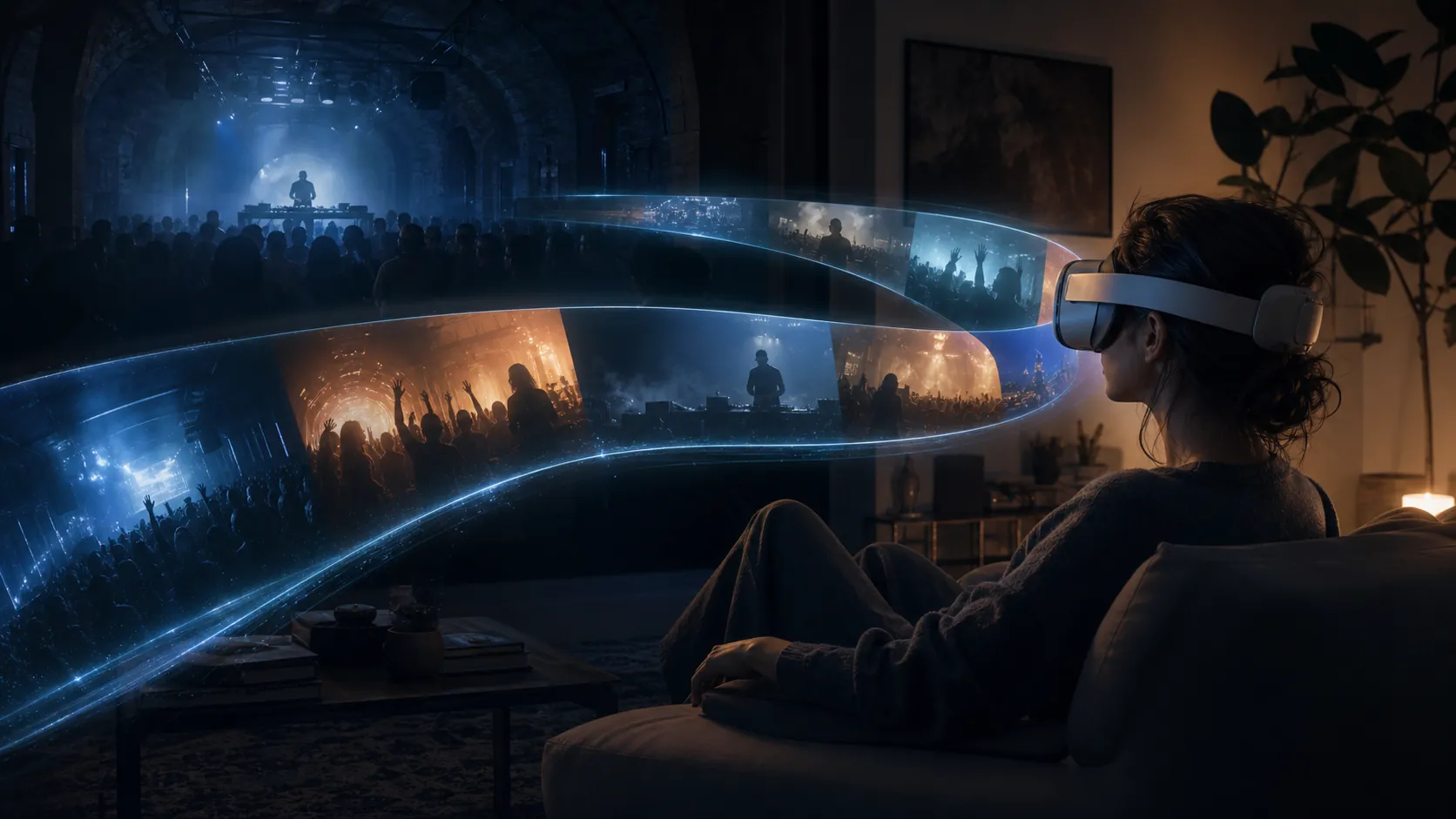
That cap is the opportunity. If a captured set can be teleported to anyone with a Vision Pro, the ceiling on a single night moves from the fire-code number to the size of the internet. The question every serious creator asks next is the honest one: how do I actually get paid for that? This is the breakdown.

The VPORT Artist Portal Is Live: Upload Your Set, Reach the Front Row

· 6 min read
CEO

It is 2am in Berlin. A melodic techno headliner is 90 minutes deep at a Kreuzberg club, the kind of room where the low end lives in your chest and nobody has glanced at a phone since midnight. That set deserves a home online that sounds as good as the room felt. As of today, it has one.

The VPORT Artist Portal is live. Any electronic artist can now claim a free page, put their sets on it, and keep their tour dates in one place. We built it for the producers and DJs whose music was never meant to live inside a 30-second clip. And it is the front door to something larger: artist portal VR concerts, where fans teleport to the front row instead of squinting at a vertical video.

How Artists Actually Get Paid on VPORT: Inside Creator Studio's Per-Minute Economy

· 6 min read
CEO

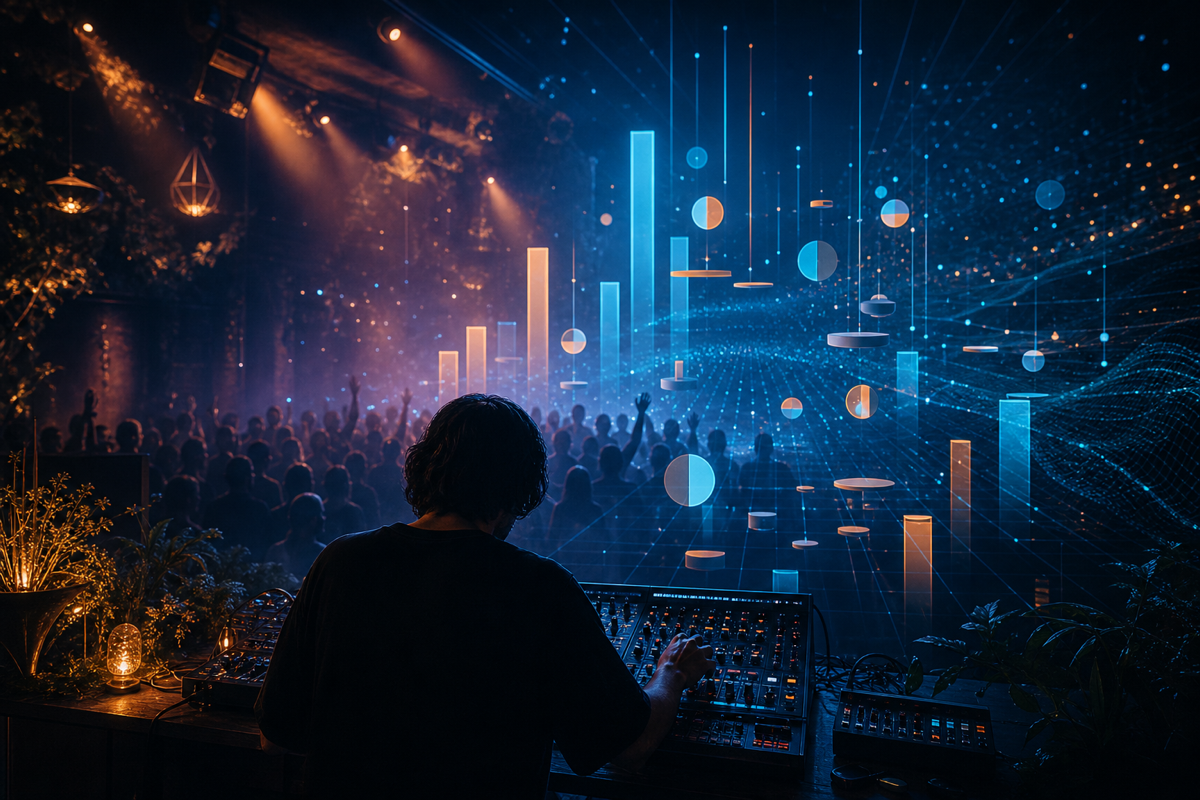
A melodic techno headliner closes a room on the Berlin canal at 6am. The low end is doing that thing where you feel it in your sternum before you hear it. The room holds maybe 600 people, and every one of them paid at the door. On a normal night that set earns once, capped by the size of the floor, and then it is gone. A few phone clips survive. The money stops the second the house lights come up.

That ceiling is the problem we built VPORT to remove. When a fan teleports into that same set on VPORT, the set keeps earning. Not once. Every minute, from anyone, anywhere, for as long as the recording lives. The question artists ask first is never about the cameras or the codecs. It is the money question: how do musicians actually make money in VR? Here is the honest answer.

The Concert You Watch Together: What Social Co-Watch Will Feel Like on Apple Vision Pro

· 13 min read
CEO

You are standing inside the Sahara Tent. The bass is in your ribs. The visuals are wrapping around you in every direction. The set is building toward the moment you have been waiting for — the transition you watched three times already, the one where the melodic line breaks open and the room ignites.

The drop hits. You yell. Nobody hears you.

That is the loneliness problem. And it is the single biggest objection people have about immersive music on Apple Vision Pro. Not the resolution. Not the field of view. Not the weight of the headset or the price of admission. The fact that you are alone in the room. Every room. Every show. Every time.

The Business of Immersive Concerts: How Promoter Analytics Change Venue Strategy

· 14 min read
CEO

Promoters have always been gamblers. Good ones. Experienced ones. Ones with deep Rolodexes and decades of instinct. But gamblers. The decision to book a 20,000-cap arena versus a 5,000-cap theatre in a secondary market has historically been made on a combination of ticket pre-sale data, social media sentiment, and gut feeling refined over hundreds of shows. It works. Until it does not. And when it does not, somebody eats a six-figure guarantee on an artist who could not fill the room.

Immersive concert capture is about to hand promoters something they have never had: behavioral data from the audience that actually watched the show. Not ticket sales. Not streaming numbers. Not social impressions. Actual viewer behavior inside a spatial recreation of the performance. Where they looked. How long they stayed. Whether they came back.

The Spatial Video Artist Profile: How Immersive Capture Changes What It Means to Be a Touring Musician

· 16 min read
CEO

The economics of touring have not changed in fifty years. An artist writes music. The artist rehearses a show. The artist performs that show in a city. Then the artist flies to another city and performs the same show again. And again. Forty times. Eighty times. A hundred and twenty times if the album cycle is long enough and the demand is there. The show is the product. But it is a product that can only be sold once per night, in one room, to the number of people the fire marshal allows.

Accessibility and VR Concerts: What Immersive Music Changes for Fans Who Can't Attend Live

· 16 min read
Head of Legal

Every time we describe VPORT, we say the same thing: Teleport into a concert from anywhere. That sentence was written for convenience. For the person who cannot fly to Ibiza on a Tuesday. For the fan who missed the ticket drop. It was a lifestyle pitch. But for a significant number of people — far more than our industry acknowledges — that sentence is not about convenience. It is about possibility. It is the difference between experiencing live music and not experiencing live music at all.

SXSW 2026 and the Immersive Music Showcase Worth Watching

· 11 min read
COO

SXSW has always been three festivals wearing a trenchcoat. Film. Music. Tech. The coverage treats them as separate tracks, which means the most interesting thing happening in Austin this March — the place where all three tracks collide — gets almost no attention. That place is immersive music. And this year, for the first time, the programming is deep enough to be worth a plane ticket on its own.

The VR Geek and the First-Timer: Two Very Different People Are About to Change Live Music

· 14 min read
CEO

We have been watching two very different people fall in love with the same platform. One of them knows more about spatial computing than most engineers at Apple. The other one just got a Vision Pro for Christmas and has not figured out how to adjust the light seal yet. They want different things. They complain about different things. They Teleport into different content. And they are both right about what this medium needs — which is the part nobody in the industry seems to want to talk about.

CES 2026 and the Spatial Computing Turn: Why Live Music Is the First Killer App

· 13 min read
CEO

CES 2026 spatial computing announcements and what they mean for immersive live music

Every year CES promises the future. Most years the future arrives as a press release and a locked demo booth. This year was different. The week of January 7, spatial computing stopped being a concept and started being a supply chain. Real headsets with real ship dates. Real cameras with real specs. Real software with real users. The conversation shifted from "will this work" to "what do we build on it."

We spent the week on the ground in Las Vegas. Not to gawk at concept cars or translucent TVs. We went because CES 2026 was the first trade show where the entire capture-to-playback pipeline for immersive content was represented under one roof. And the category that kept coming up in every backroom meeting, every panel sidebar, every late-night conversation at the Wynn? Live music.