
How Artists Actually Get Paid on VPORT: Inside Creator Studio's Per-Minute Economy
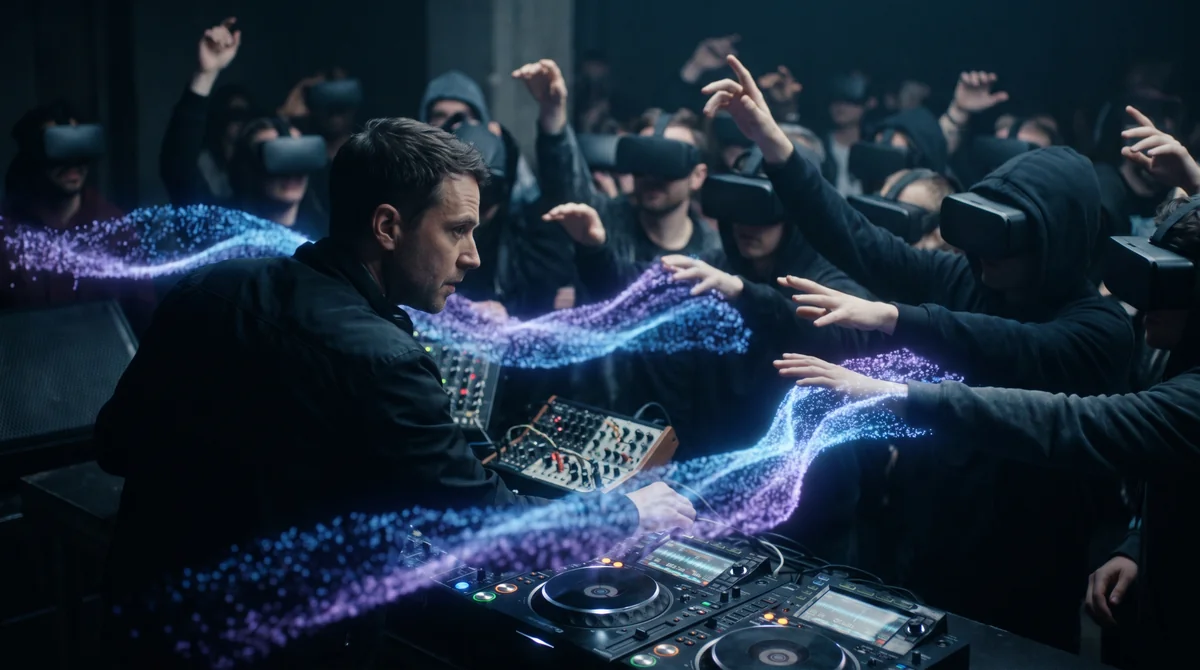
A melodic techno headliner closes a room on the Berlin canal at 6am. The low end is doing that thing where you feel it in your sternum before you hear it. The room holds maybe 600 people, and every one of them paid at the door. On a normal night that set earns once, capped by the size of the floor, and then it is gone. A few phone clips survive. The money stops the second the house lights come up.
That ceiling is the problem we built VPORT to remove. When a fan teleports into that same set on VPORT, the set keeps earning. Not once. Every minute, from anyone, anywhere, for as long as the recording lives. The question artists ask first is never about the cameras or the codecs. It is the money question: how do musicians actually make money in VR? Here is the honest answer.
The Minute Is the Unit
Most music platforms bill by the month. You pay a flat subscription, the platform pools the cash, and an algorithm decides how to split it. VPORT does the opposite. We built the whole economy around a single unit: the minute.
A fan loads a wallet with a preset bundle, $4.99, $9.99, or $19.99, and spends it by the minute they are in the room. Content sits in three tiers. Basic costs 3 cents per minute, Premium 5 cents, and Platinum 8 cents, with the tier tracking how the set was captured, from an iPhone spatial clip up to an 8K stereoscopic rig. A $4.99 starter bundle buys 166 minutes of Basic, 100 of Premium, or 62 of Platinum. No subscription to cancel. No 30-day lock-in. You pay for the time you spend in the room, the way you would pay a cover charge that only runs while you are actually inside.
For a fan, that is the accessibility story: under five dollars, no headset assembly, no commitment. For an artist, it is something more interesting. Every minute a viewer spends inside your set is a metered transaction, logged against your catalog, attributed to you. The wallet, the bundles, and the per-minute metering already run live through the Credit and Billing Hub on both Vision Pro and the web. The plumbing is not theoretical. It is what processes the money today.
Half of Every Minute Is Yours
Here is the part artists want in plain numbers. VPORT runs a 50/50 revenue share. For every dollar a viewer spends inside your content, half is yours and half is ours. That split is documented openly in our creator earnings guide, and it applies across paid content, whether someone teleports into a recorded set or, later, a ticketed live set.
Run the math on a real minute. A fan teleported into your set in Premium spends 5 cents a minute. Half of that, 2.5 cents, lands in your balance. An hour inside your Premium set is 3 dollars from the viewer and 1.50 to you. That sounds small until you remember the ceiling is gone. The Berlin room held 600 people for one night. A recording does not have 600 seats. It has every Vision Pro owner who wants to stand in your booth at 4am their time, on a Tuesday, six months from now.
Payouts are predictable on purpose. Earnings accumulate through the month and pay out on the 15th of the following month, once your balance clears a 25 dollar threshold. Below that, the balance rolls forward until it does. No invoicing, no chasing a promoter for your cut, no waiting on a quarterly statement. The money moves on a schedule you can plan around.
Why the Minute Beats the Streaming Pool
The reason we chose per-minute over a subscription pool is not technical. It is about who gets paid and why.
In a pooled subscription model, every artist competes for slices of one fixed pot. A niche melodic techno set is up against every pop record, every podcast, every catalog giant, for a share decided by total platform listens. The long tail loses by design. The recorded music business is worth around 29.6 billion dollars a year and the electronic side of it about 12.9 billion, and yet most independent electronic artists see a rounding error from streaming because the pool rewards scale, not depth. The IFPI Global Music Report lays out how concentrated that revenue really is.
Per-minute flips the incentive. The people who teleport into your set fund your set. Not a pool, not an average, not a quarterly true-up. If 40 people each spend 20 minutes inside your room, those minutes pay you directly, and it pays more when they stay longer. Attention is the asset, and you capture it instead of subsidizing the catalog above you. Live music has always understood this. The room you fill is the money you make. We took that logic, uncapped the room, and kept the artist at the center of it.
What Creator Studio Shows You
Money you cannot see is money you do not trust, so the numbers are not hidden behind a support ticket. The Creator Studio dashboard we have been building puts the whole picture in one place: total views, total time in the room, unique viewers, return-viewer rate, and the revenue each of those produced. It tells you not just that people showed up, but how long they stayed, which is the metric per-minute actually rewards.
The Earnings view is the one artists check first. Total earnings since you joined, revenue this month, the balance available for payout, and a withdraw button when you cross the threshold. Every charge traces back to an event, a session, and a play time, so the line between what a fan spent and what you earned is legible end to end. If you want the full walkthrough, it lives in the analytics and earnings guide.
This is the half of the creator story the blog has not told yet. We have covered the three-camera creator ladder and the portal walkthrough and what a spatial video artist profile looks like. The money is the part that turns all of that from a hobby into a catalog. A Linktree of dead links does not pay you. A metered, owned, immersive catalog does, and on July 1 the free Artist Portal becomes the front door to it.
If you make music that deserves more than 600 seats and one night, claim your space and start building the catalog that keeps earning. Start at portal.thevport.com/signup.