
Berlin Electronic Music Venues: A Verification Guide
Berlin's electronic music culture deserves more than a recycled ranking of famous doors. In 2024, technoculture in Berlin entered Germany's nationwide inventory of intangible cultural heritage. That is a recognition of a living culture built around music, dance events, fashion, technology, and community. It is not a UNESCO World Heritage designation, and it does not make every venue, listing, or travel claim timeless.
For a useful Berlin electronic music guide, start with the night you want to hear. Then verify the room, entry conditions, recording rules, and playback format with sources that can answer for them.
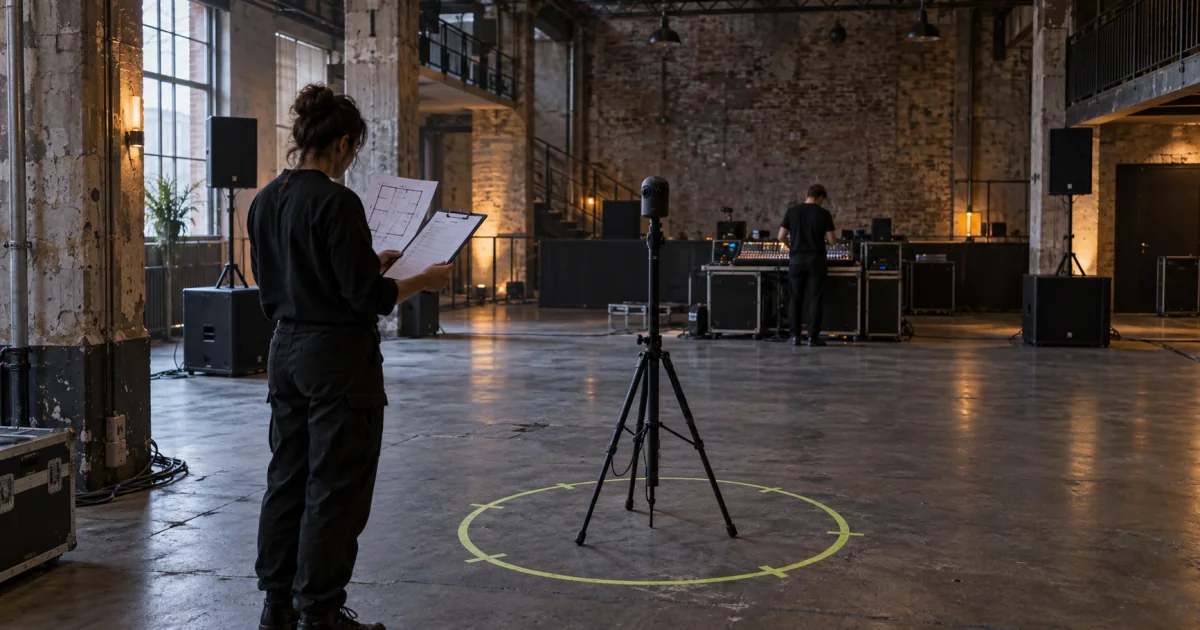
Fictional AI-generated editorial image. It does not depict a real Berlin venue, event, artist, or VPORT capture.
Why a Fixed "Best Berlin Clubs" List Fails
Berlin's official club directory spans multiple districts and music styles. Programs, opening patterns, ticket rules, and venue status can still change after any guide is published. A search result is therefore a discovery source, not proof that a particular event is happening or that entry is available.
Use three layers of evidence:
- Discover candidates. Start with the Berlin.de club directory or another current city-level directory.
- Confirm the night. Open the venue's own program and verify the date, lineup, room, address, and authorized ticket link.
- Read the conditions. Check the venue's current guest, accessibility, age, bag, photography, re-entry, and refund information. If a condition is missing, treat it as unknown.
Tresor illustrates why these layers should stay separate. Its official history documents an opening date of March 13, 1991 and the club's exchange with Detroit artists. Its current program answers a different question: what is scheduled now. Its ticket information also says that a presale ticket does not ensure entry. One page cannot safely substitute for the others.
A Five-Check Berlin Venue Shortlist
Before choosing a room, make a small evidence table. Do not rank a venue until all five rows have a current answer.
| Check | Evidence to open | Decision question |
|---|---|---|
| Music | Official event page and lineup | Is the night actually centered on the style or artists you want? |
| Room | Official room name, venue map, or organizer plan | Which floor or area hosts the event, and what sightlines will it create? |
| Entry | Official guest and ticket terms | Does a ticket guarantee admission, and what restrictions apply? |
| Access | Venue or organizer accessibility details | Can everyone in your group enter, move through, and use the space safely? |
| Recording | Written venue and rights-holder permission | Is any filming allowed, and who can authorize publication? |
This method is slower than copying a top-ten list. It is also far less likely to send you to the wrong room, an outdated event, an unauthorized reseller, or a night that does not match your music.
What Makes a Room Relevant to Spatial Video
For a physical visit, the lineup may be enough. For a spatial recording, the room becomes a technical subject. Evaluate it before discussing cameras.
1. Geometry
Record the floor shape, ceiling height, columns, balconies, stage or booth position, and audience circulation paths. A dramatic industrial shell can also create blind zones, unsafe tripod positions, and blocked emergency routes. A floor plan and a supervised walk-through are stronger evidence than architectural adjectives.
2. Camera position
Mark the proposed viewpoint on the plan. Check the nearest audience path, barrier, lighting fixture, speaker, and exit. A position that looks central on paper may put the lenses too close to people, behind a column, or directly in a high-output speaker field.
3. Audio plan
"Spatial" is not an audio specification. Confirm the microphone layout, channel format, monitoring path, and how the final player will interpret those channels. A headset cannot reconstruct room direction from a mix that never preserved it.
4. Capture and playback format
Do not use spatial video, 180, 360, and VR as synonyms. Ask for the exact projection, mono or stereo layout, resolution, frame rate, audio format, and supported playback devices. Then test a representative file on the same delivery path the audience will use. The techno in VR room-test guide provides a format-neutral comparison workflow.
5. Human experience
Test the view at standing and seated heights. Check exposure changes, low-light motion, occlusion, headset comfort, captions or other access needs, and whether the chosen position respects the audience rather than turning the room into a camera set.
Berlin Club Culture Is Not Blanket Recording Permission
Recognition of Berlin technoculture reflects a community and its practices. The German Commission for UNESCO's entry describes music and dance events as central to that culture. It does not grant permission to film a room, a performer, a composition, a sound recording, or the people attending.
Before capture, identify and document each approval separately:
- venue and event authority;
- performers and identifiable people;
- composition rights;
- master-recording rights; and
- the territories, platforms, duration, edits, clips, and promotional uses allowed.
A public event listing proves that an event was advertised. It does not prove recording or distribution rights. A ticket proves a purchase. It does not override house rules. The music-rights clearance guide turns these approvals into a final-cut checklist.
If a venue limits photography or filming, respect that rule. Do not hide a camera, infer consent from other guests' phones, or describe restricted footage as a realistic future catalog item.
How to Evaluate a Berlin Electronic Music Recording
When a recording is publicly offered, judge the exact asset rather than the reputation of the venue.
- Identity: Does the official event or rights-holder page confirm the venue, room, artists, and date?
- Authority: Does the publisher explain who recorded it and under what permission?
- Format: Is the projection, stereo layout, audio format, runtime, and device support stated?
- Completeness: Is this a full set, an edited program, a clip, or a trailer?
- Viewpoint: Can you see where the camera was placed and whether the room remains legible?
- Access: Are price, account, region, replay window, accessibility, and refund conditions visible before purchase?
- Playback: Has the exact file been tested on the target device and current app or browser version?
If one of these answers is missing, label it unknown. A famous venue name does not fill an evidence gap.
A Fast Decision Workflow
Use this sequence before travel, capture, or playback:
- Open the current official event page.
- Match the date, artists, room, address, and ticket source.
- Read entry and accessibility conditions.
- For recording, obtain written venue, performer, music, and distribution permissions.
- Map the camera position, crowd flow, exits, lighting, and speaker layout.
- Record a representative technical test.
- Play that exact test through the intended delivery path.
- Recheck the live listing immediately before relying on it.
This article does not announce a Berlin venue partnership, event capture, catalog item, or playback availability on VPORT. If a Berlin recording appears on a supported VPORT surface, the exact listing still has to prove what fans can teleport into, on which devices, and under what access terms.
Berlin electronic music is inseparable from its rooms, but the useful question is not which room has the strongest legend. It is which current night, room, permissions package, and delivery format survive a careful readback.