
Your VPORT Artist Portal vs Linktree: What You Actually Get as an Independent Artist
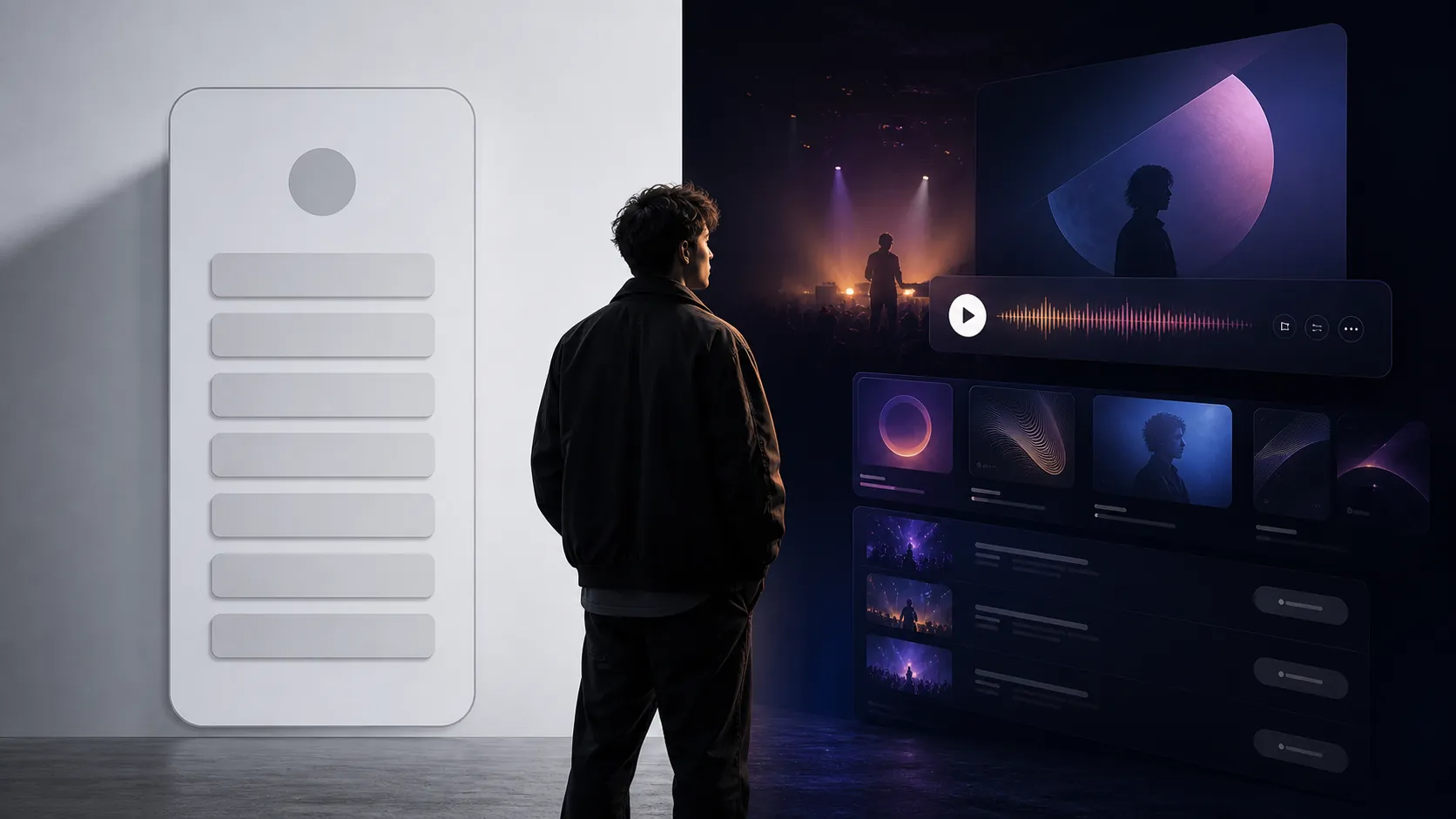
Open the link in bio of almost any independent house producer and you get the same page. A white card with six blue buttons stacked down the middle. Spotify. SoundCloud. Instagram. A booking email. A merch store that has been dead since spring. Nothing on it makes a sound. Somebody who closed a Vancouver warehouse night at 3am last weekend is represented online by a list of buttons.
That is the Linktree problem, and it is not really a software problem. Link aggregators were built to route traffic somewhere else, and an artist is not traffic. So here is the honest comparison, feature by feature. You can open a real page while you read: this is a live VPORT artist page.
I'm Shayan, founder of VPORT. We shipped the portal on July 1 and I wrote about what launch day looked like then. This post is the part that comes after. Not why the page exists, but what you get on it that a music artist link page from 2018 will never give you.
A Link Page Routes You Away. Yours Should Hold People.
Every link aggregator has the same architecture. It is a menu. A fan arrives, reads six labels, picks one, and leaves. The tool measures that leaving, calls it a click-through rate, and sells the dashboard back to you as a subscription.
Think about what that costs an electronic artist specifically. Your work is an hour long. It has a build at the 40-minute mark that took you three years of Friday nights to learn how to place. A menu cannot carry any of that. It carries the word "SoundCloud" in blue.
The bar VPORT set for the artist portal was simple. A fan who lands on your page should hear you before they decide anything. Everything below follows from that one rule.
Your Music Plays On The Page
This is the difference that matters most, so it goes first. VPORT for artists means native embeds, not link-outs. Connect SoundCloud, Spotify, Apple Music, Mixcloud, Beatport, or YouTube and the set plays inline, on your page, in the order you set.
No webview. No "open in app" modal that fails on a locked-down work laptop. No third redirect where you lose half the people who tapped. A promoter opens your URL at midnight while building next month's lineup, presses play on your last closing set, and stays on your page while it runs.
The Two-Second Test
Here is a test worth running on your current link in bio. Open it on your phone and count what happens between the tap and the first sound. On a link aggregator it is a tap, a load, a redirect, and then a decision about whether to install something. On a VPORT artist page it is a tap and a play button that is already on screen.
Every step in that chain is a place people leave. That gap is also why "free Linktree alternative for artists" is a slightly wrong way to describe what we built. We did not clone a menu and remove the price.
Tour Dates Without The Bolt-On
Most artists I talk to run three products to do one job. Linktree for the links, Bandsintown or a spreadsheet for the dates, and a Gmail address for booking. Three things to update, so in practice one of them is always wrong, and it is usually the dates.
Tour dates and show announcements are built into the portal page. Add the Friday warehouse night in Berlin and the back-to-back you are flying to Ibiza for, and the page carries them until each date passes, then archives them on its own. Nobody has to remember to delete a show that already happened.
Announcements sit in the same place. When a lineup drops or a release date moves, it goes on the page your fans already have saved, instead of a story that disappears in 24 hours.
Built For 2026, Not 2018
Design is the part people are least comfortable saying out loud, so I will say it. The link-in-bio look has barely moved in a decade. The white card, the rounded pill buttons, the tiny avatar at the top. It is a neutral container by design, which sounds fine until you realize it flattens a melodic techno producer and a wedding photographer into exactly the same layout.
VPORT is a music experience company, and the pages are dark, low-noise, and built so the artwork and the player are the loudest things on screen. The content is the color. That is a real position, not a style preference. When your page is mostly interface, the interface is what people remember.
The page is free. There are no ads on it, no upsell wall, and no Pro tier that holds your own URL hostage until you pay to remove a watermark.
The Page Is An On-Ramp, Not A Dead End
This is the part no link aggregator can follow us into, and it is the reason we built a portal instead of a better menu.
VPORT films sets in 8K 360 with an Insta360 Pro 2 rig and in spatial video, then puts them on Apple Vision Pro so a fan can teleport into the room. Not a wide shot from the back of the room. The booth. The spot in front of the low end that you could never buy a ticket close enough to reach. If you want to see what that actually looks like, we broke the format down in our piece on spatial video and artist profiles, and Apple documents the hardware side on the Apple Vision Pro product page.
Your portal page is where that lands. Today it holds your embeds and your dates. It is also the address a fan keeps, so when we host a spatial show, the same URL they saved in August is the link they open to stand in the front row. An artist page VR platform only works if the page comes first and the stage comes second. A link aggregator has nowhere to put a stage.
Worth being precise about money here, because VR concert monetization gets oversold constantly. The portal page itself is free and stays free. VPORT earns on the fan side, where people pay per minute to teleport into a concert, and creators earn from the minutes their content holds. The share, the payout schedule, and the minimum balance are all written down in the creator earnings guide rather than promised in a blog post, and I would rather you read the documentation than take my word for it. We went deeper on the economics in our breakdown of virtual concert revenue for artists.
That is also why the page can stay free. We do not need to charge you to host a link, because the platform earns where fans actually spend.
What This Comes Down To
A link aggregator is a directory entry. It tells someone you exist and sends them somewhere else to find out what that means. A VPORT artist page is a room. Your sound is playing when they walk in, your next show is on the wall, and the same address will one day open onto a stage they can stand on.
Setting one up takes about as long as finding your SoundCloud password. The creator getting-started guide walks the whole flow, and edits go live as you make them.
Start at portal.thevport.com/signup and give people something that makes a sound.