vport

31 posts tagged with "Electronic Music"

Electronic, techno, house, and dance music

View All Tags

Techno in VR: The Room Test for Choosing an Immersive Set

· 8 min read
CEO

Searching for techno in VR can return several experiences that look similar in a headline but feel completely different in a headset. A flat concert video shown on a virtual screen, a stereoscopic performance with depth, and a 180-degree or 360-degree recording are not interchangeable. Neither are stereo, binaural, and head-tracked spatial audio.

The useful question is not whether a listing uses the word immersive. It is whether the recording preserves enough of the room to make the set legible: where the booth sits, where the audience gathers, how the camera occupies the floor, and whether sound remains anchored to the scene.

This guide turns that question into a practical room test. It does not promise that a particular artist, club, festival, or recording is available on VPORT. Catalogue, price, region, device support, and access terms should always be checked on the current event listing.
How Electronic Music Found Its Home in Spatial Video

· 6 min read
VPORT Team

When a producer starts a track, they are not writing a song. They are building a room. The kick drum tells you where the floor is. The reverb on the hi-hat suggests how high the ceiling sits. The sidechain compression is what the air does when a bass frequency moves through speakers that cost more than most people's cars.

The producer's goal has always been to put you inside a sound that does not exist in your body yet. For four decades, the only reliable delivery method was the room: the club, the festival, the warehouse, the concrete basement that holds 300 people and a sound system that was not designed to hold its shape on any recording format available before now.

Spatial video is the first consumer format that carries the room with it.

Your VPORT Artist Portal vs Linktree: What You Actually Get as an Independent Artist

· 7 min read
CEO

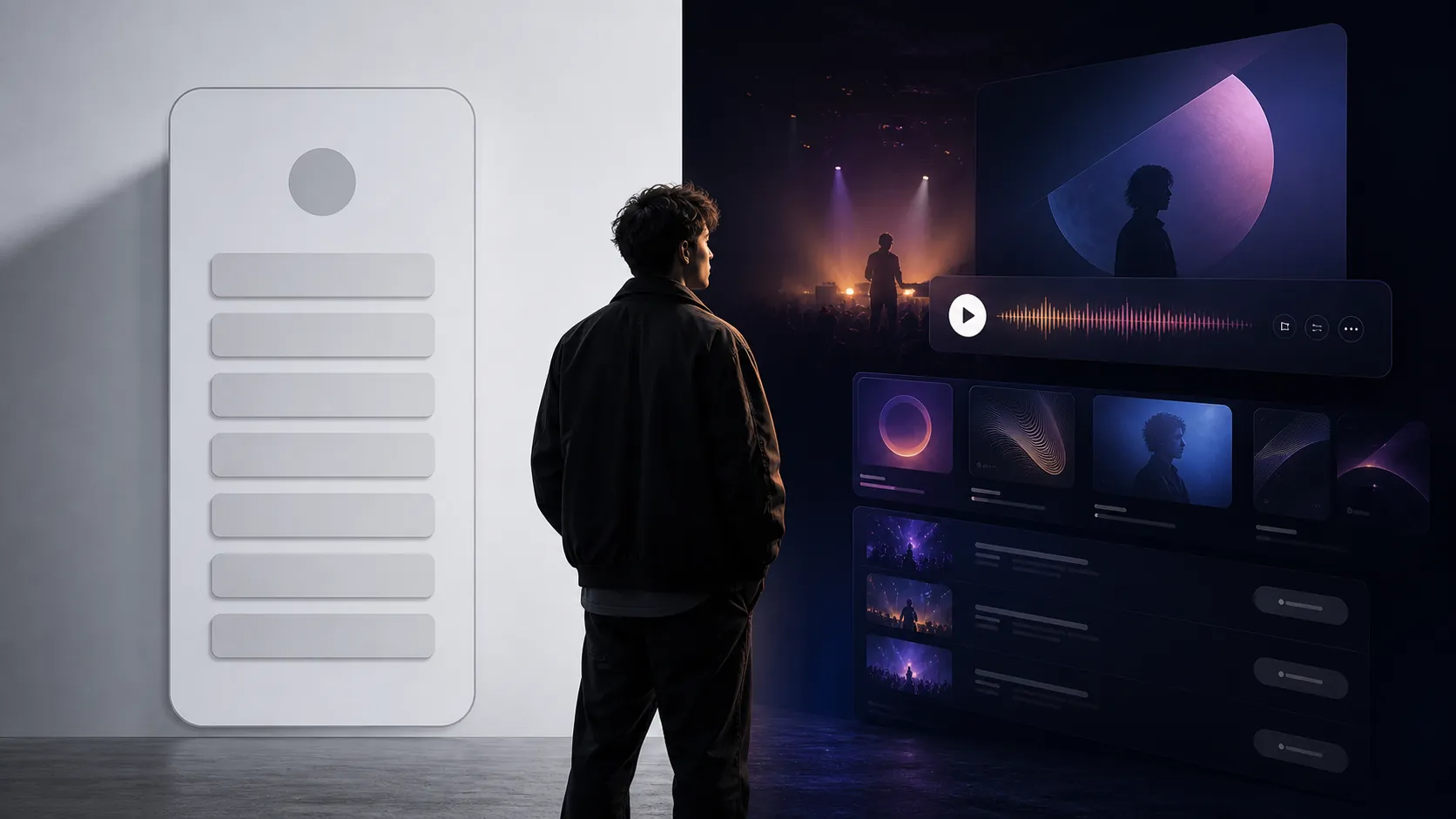
A fictional independent artist choosing between a generic link menu and a music-first artist destination

Open the link in bio of almost any independent house producer and you get the same page. A white card with six blue buttons stacked down the middle. Spotify. SoundCloud. Instagram. A booking email. A merch store that has been dead since spring. Nothing on it makes a sound. Somebody who closed a Vancouver warehouse night at 3am last weekend is represented online by a list of buttons.

That is the Linktree problem, and it is not really a software problem. Link aggregators were built to route traffic somewhere else, and an artist is not traffic. So here is the honest comparison, feature by feature. You can open a real page while you read: this is a live VPORT artist page.

The Set Is the Album: Why On-Demand VR Concerts Beat Live for Electronic Music

· 6 min read
CEO

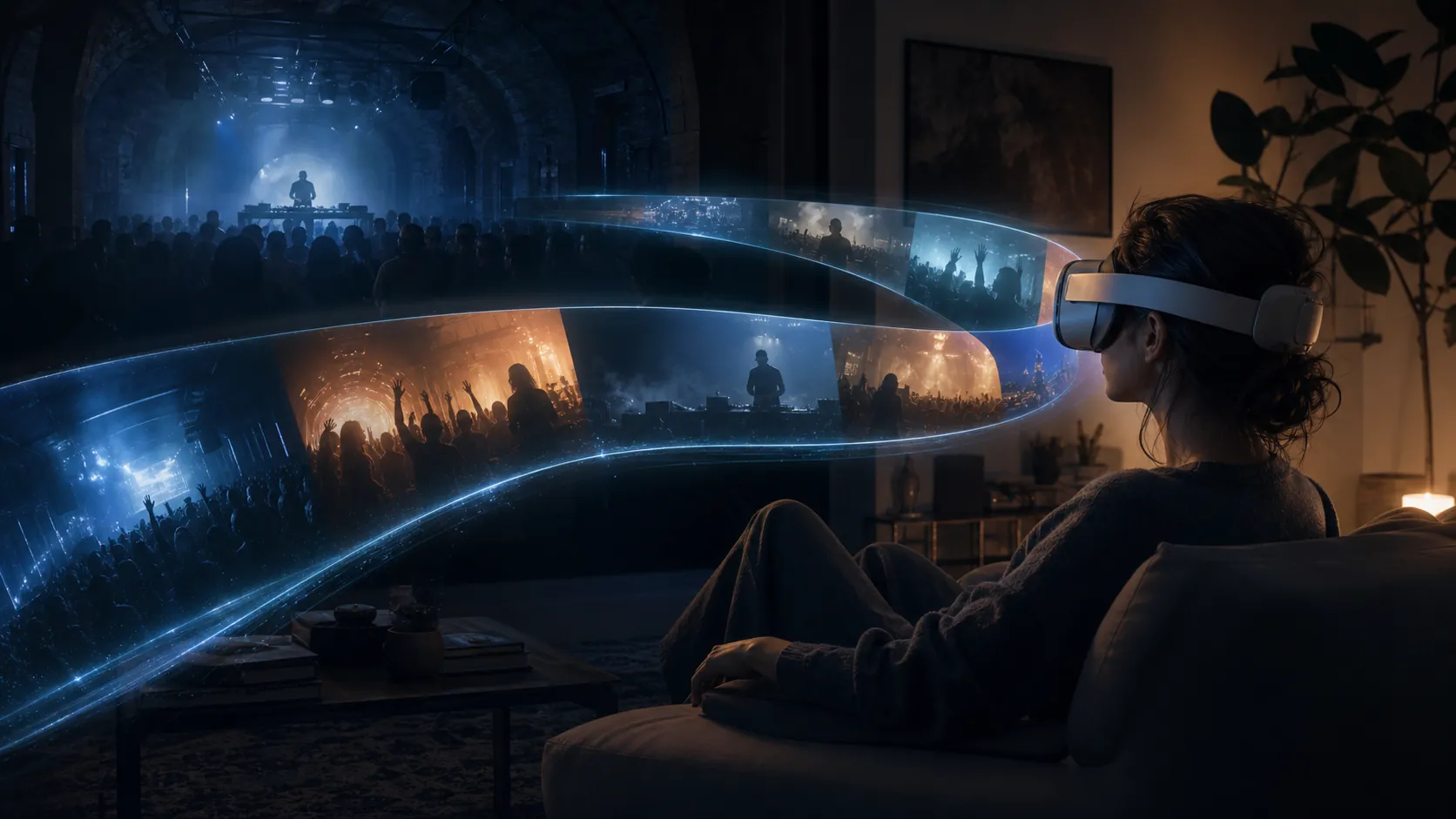
A fictional underground electronic set preserved as a replayable visual timeline for a headset listener at home

Somewhere around the fourth hour, a good techno set stops being a sequence of tracks. The kick has been running so long your body has filed it under weather. A hi-hat opens half a step. Two hundred people who have not looked at a phone since 1am feel the room tilt before they hear why. That moment is not a song. It is the payoff of three hours of setup, and it lands only because of everything stacked underneath it.

Now try to deliver that live to someone in Los Angeles. It is 7pm on a Friday there. The buffer stutters at the exact bar the build resolves. The bitrate collapses into the strobe and the picture turns to porridge. They catch nineteen minutes and go make dinner.

This is the case for on demand VR concerts, and it is not a consolation prize for platforms that cannot do live yet. For electronic music, the recorded set is the better product.

After the Festival: The Room That Sold Out Without You

· 6 min read
CEO

On Friday July 31, an open-air electronic music event runs at Burgess Park in south London. Its ticketing page listed entry from £50 and the Friday date as sold out. The Saturday session at the same site was still on sale when we checked on Monday July 27, and the official event pages did not announce a livestream for either day.

That is the whole story, and it is a more interesting one than it looks. A field in Southwark has a fence around it, the fence has a number attached to it, and once that number is reached the event is complete. Everyone who wanted in and did not move fast enough is holding a browser tab and a sold out sign.

Amsterdam Electronic Music Venues: Why the Room Matters in Spatial Video

· 5 min read
CEO

Amsterdam's electronic music identity is tied to its rooms. A circular former gasworks, an industrial shipyard, a basement under a waterfront tower, and temporary spaces across the city can each make the same track feel different.

That is why Amsterdam is an interesting subject for spatial video. The format can preserve more than a view of the performer. It can record how architecture, lighting, audience movement, and sound work together inside a venue.

Awakenings Festival 2026: What Outdoor Techno Teaches Us About Spatial Video

· 5 min read
CEO

Awakenings Festival 2026 took place in Hilvarenbeek from July 10 through 12. The official event page listed the three-day festival as sold out and published a program spread across multiple outdoor areas.

That combination makes Awakenings a useful case study for spatial video. An open field, a large crowd, daylight, multiple stages, and architecture built to be seen from many angles all create information that a single camera frame cannot fully preserve.

Beyond the Festival: Why Club Nights and Warehouse Sets Belong in 360

· 5 min read
CEO

Picture a converted warehouse late at night. The room is compact, the lighting is minimal, and the DJ is close to the dance floor. It is a different experience from watching a distant festival stage. That physical density and directness deserve a larger place in the conversation about virtual reality music events.

We have been thinking about this for a while at VPORT. Early conversations around spatial video and 360 concerts often focused on festivals, and the reasons make sense. Festivals are visible. They have recognizable names. The main stage provides a clear camera position and a sightline that translates to a headset without much explanation. Clubs offer another side of electronic music: smaller rooms, longer-form programming, local scenes, and the relationship between a venue and the people who return to it.

Built for Presence: Afro House and Tech House in Immersive Video

· 6 min read
CEO

Picture a fictional open-air room at blue hour. The booth is visible, but it is not the only thing worth watching. A percussion pattern moves through the mix while the crowd forms smaller scenes across the floor. The interesting question for an immersive recording is not whether one genre is "better for VR." It is which details make a particular set feel like itself, and whether the production preserves them.

Afro house and tech house can both reward wide room coverage, long-form editing, and spatially authored sound. They do not reward those choices in exactly the same way. Their labels also cover broad, changing scenes, so this is a production guide rather than a claim that every track or event follows one formula.

Meta Quest Concerts: What VPORT Has Planned for 2026

· 5 min read
CEO

Somewhere tonight, a warehouse room is filling up for a Saturday that will not end until the sun is up. The sub-bass is already loading the floor. Most of the people who would love that room will never stand in it. The flight, the door price, and the distance from home all get in the way. VPORT is built to narrow that gap.

VPORT's headset experience is available on Apple Vision Pro today. Meta Quest 3 and Quest 3S support appears on our summer 2026 roadmap, but it is not available yet and there is no announced launch date. This is the honest version of what the current roadmap says, what remains subject to change, and why adding a lower-cost headset family could make immersive sets accessible to more fans.