
Seoul Electronic Music: Techno Diplomacy and Capture Planning
In June 2026, the German Embassy in Seoul hosted a club-culture event at Kockiri, a queer bar in Itaewon. The Korea Herald reported that more than 150 club operators, DJs, artists, and cultural practitioners attended. The embassy calls the wider initiative Techno Diplomacy.
The name is striking, but its scope needs to stay precise. It is an embassy cultural-exchange program, not official recognition of every Seoul club and not evidence of a VPORT relationship with any venue. It is a useful entry point into the Seoul electronic music scene because the program asks what club spaces can contribute beyond nightlife.
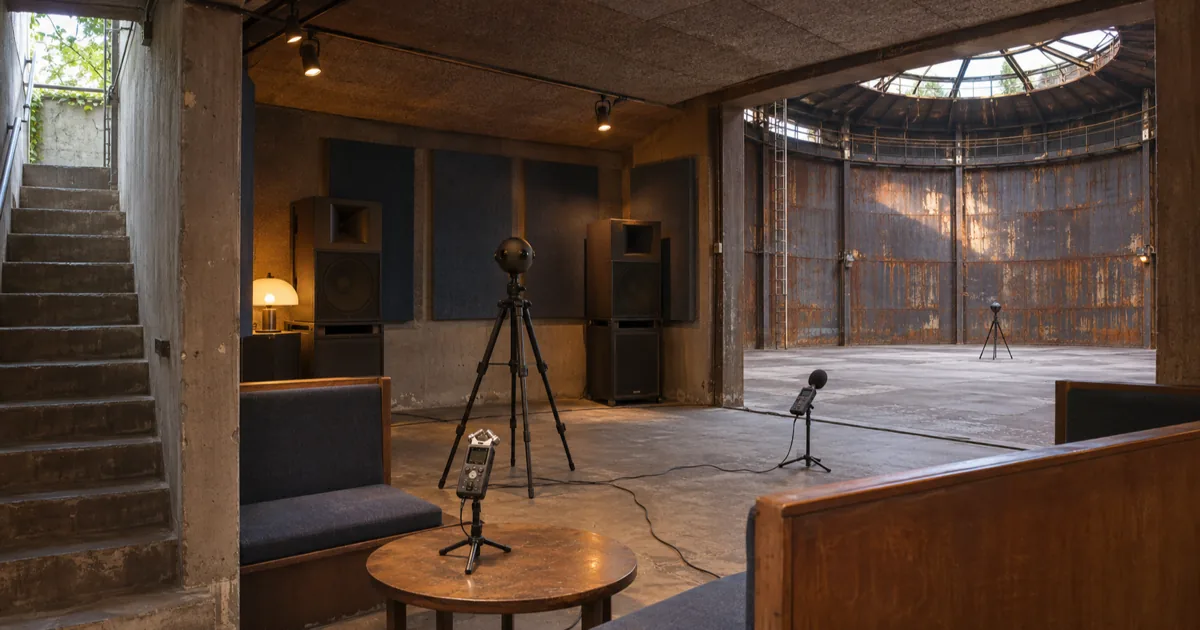
Original AI-generated editorial image of two fictional capture spaces. It does not depict Faust, Soap Seoul, Oil Tank Culture Park, another real venue, an event, an artist, a VPORT production, or a partnership.
Why a Foreign Embassy Programmes Club Nights in Seoul
The program had been running for more than two years by June 2026, so it was not a one-night experiment. Korea JoongAng Daily reported that the work included DJ exchange workshops, funded trips to Berlin for Asian artists, and club events at places including Faust and the Mapo Oil Tank Culture Park. David Bieger, the embassy's head of public diplomacy, said club spaces can provide safe space for communities.
The German cultural reference has a public paper trail. In March 2024, Berlin techno culture entered Germany's federal inventory of intangible cultural heritage. That is a German national inventory, not UNESCO's international Representative List. Our Berlin guide covers the designation and the Detroit and Chicago influences named in the German commission's entry.
The Seoul panel also surfaced a local policy dispute. Faust resident Joon Kwak described zoning rules as a barrier to club programming, while visitBerlin cultural director Lutz Henke contrasted Seoul redevelopment with Berlin's temporary reuse of vacant buildings. Those are attributed views from panelists, not a settled judgment that Seoul ignores its electronic-music scene.
Two Itaewon Rooms, Not One Citywide Template
Start with Faust. Resident Advisor lists it on the third floor at 127-15 Itaewon-dong, with a capacity of 250. Its venue profile describes two rooms: an acoustically treated main room with a hand-built Kirsch Audio system and a more relaxed Tanz bar. The listing also shows recurring nacht events and separate INVITES bookings.
Soap Seoul followed a different path. Resident Advisor reported that the club left its former 132-3 Itaewon space in 2021, continued as a roving party, and opened a new venue at 217 Itaewon-ro in February 2026. The report confirms the address and the return of the club's signature blue light, but it does not establish the new room's capacity or architectural layout.
These examples support a narrower conclusion than the original draft made. One documented room is compact and upstairs; another organization operated without a permanent room for several years before reopening. They do not prove that Seoul's entire underground scene occupies upper floors, mixed-use buildings, or one common type of tenancy.
The Municipal Counterexample: Oil Tank Culture Park
Oil Tank Culture Park shows why a citywide architecture claim would be misleading. The Seoul Metropolitan Government converted a restricted petroleum depot in Mapo into a public cultural complex that opened in 2017. The official Oil Tank Culture Park overview describes six tanks and a cultural yard rather than a conventional nightclub.
Each tank creates a different production problem. T1 is a glass-roofed performance and exhibition pavilion. T2 combines an outdoor stage with a performance hall below it. T4 retains the circular industrial volume and brings daylight through an opening in the roof. The city also says the depot closed before the 2002 World Cup because it was classified as a risk facility near the stadium.
The park is relevant here because the embassy program used it for club-culture events. It is not evidence that the park operates as a club, and Korea JoongAng Daily explicitly distinguished it from one. It does show that Seoul's electronic-music programming can move between a compact private room and a large municipal adaptive-reuse site.
What These Spaces Ask of a Capture Plan
A listed capacity of 250 and a two-room plan make Faust a useful example of compact geometry, but a public venue profile is not a technical survey. A producer still needs permission to scout the exact event setup, measure sightlines, test exposure, and listen from more than one position before selecting equipment.
In a compact room, a spherical camera can preserve activity beside and behind the lens, but placement still controls what is blocked by people, speakers, and walls. A position that captures the booth may lose the second room or the audience entering from the stair. Our concert video format checklist explains when 360, spatial, or flat capture fits the intended viewing result. No format replaces a room test.
The Oil Tank Culture Park creates the opposite scale problem. A position that feels close in T1 could leave T2's outdoor stage or T4's circular volume without useful depth. Daylight from a glass roof or roof opening also changes across a program. The practical response is to mark candidate camera positions, record short exposure tests, and review them before the event rather than assuming one setup transfers between spaces.
Audio deserves a separate plan. Put test recorders or measurement microphones at meaningfully different listening positions, compare the direct sound with room reflections, and confirm where cables and stands can be placed safely. Our Amsterdam room test provides a four-position method, but its results describe the tested room, not Seoul by analogy.
Then clear the paperwork. A ticket does not automatically grant the right to record performers, music, or audience members, or to publish the result. Our music rights guide covers the permissions and licenses a project may need, and the creator documentation explains where VPORT's own publishing workflow starts.
To be explicit, VPORT has no Seoul catalogue, and this article does not announce one. Faust, Soap Seoul, Kockiri, and Oil Tank Culture Park are independent and have no affiliation with VPORT. This is a cultural and capture-planning guide, not evidence that VPORT has filmed in any named space.
Following Seoul Electronic Music Without Assuming Access
The scene continues to connect with artists and labels outside Korea. On November 6, 2026, Berlin label Live From Earth and London label Eastern Margins presented Found Friends at Blank Site in Itaewon. The Fader described the event as a cross-cultural gathering and placed it within a broader two-year rise in international attention for East Asian underground music. That is the publication's assessment of one event and a wider trend, not proof that every Seoul club shares the same audience or global reach.
Our Tokyo guide covers another city in the region through its own rooms and capture constraints. Read the guides as separate case studies, not as evidence that Seoul and Tokyo form one interchangeable scene.
VPORT provides access only to performances that creators have actually published and that are available for a viewer's account, device, and region. Public listings currently show VPORT on Apple Vision Pro and Meta Quest, while compatible content can also play in a web browser. The mode depends on the footage attached to the selected event.
Current VPORT pricing ranges from free to 8 cents per minute, with $5, $10, and $20 wallet top-ups. At the published paid rates, 60 minutes costs $1.80, $3, or $4.80, but the minimum paid top-up is $5. Those prices describe available VPORT content, not any Seoul venue or event named in this guide.
Browse the current VPORT catalogue, then confirm the listed performance, venue, playback format, region, and price before starting. If no Seoul performance is listed, this article should not be read as suggesting otherwise.