vport

37 posts tagged with "Concerts"

Concert experiences and live performances

View All Tags

Techno in VR: The Room Test for Choosing an Immersive Set

· 8 min read
CEO

Searching for techno in VR can return several experiences that look similar in a headline but feel completely different in a headset. A flat concert video shown on a virtual screen, a stereoscopic performance with depth, and a 180-degree or 360-degree recording are not interchangeable. Neither are stereo, binaural, and head-tracked spatial audio.

The useful question is not whether a listing uses the word immersive. It is whether the recording preserves enough of the room to make the set legible: where the booth sits, where the audience gathers, how the camera occupies the floor, and whether sound remains anchored to the scene.

This guide turns that question into a practical room test. It does not promise that a particular artist, club, festival, or recording is available on VPORT. Catalogue, price, region, device support, and access terms should always be checked on the current event listing.
VR Concert Showdown: VPORT vs Blue Frog Immersive on Apple Vision Pro in 2026

· 8 min read
CEO

Blue Frog Immersive launched its Apple Vision Pro app in April 2026. It is a real product from a company that has spent years filming concerts, and it landed on the same platform that VPORT has been building on since visionOS shipped. Two VR concert apps on one headset, competing for the same searcher. If you are looking for the best VR concert app for Apple Vision Pro in 2026, you have arrived at the right question.

This is not a press release for either side. The point is to help you understand what each platform actually delivers so you can make a call that matches the music you want to be inside.

How Electronic Music Found Its Home in Spatial Video

· 6 min read
VPORT Team

When a producer starts a track, they are not writing a song. They are building a room. The kick drum tells you where the floor is. The reverb on the hi-hat suggests how high the ceiling sits. The sidechain compression is what the air does when a bass frequency moves through speakers that cost more than most people's cars.

The producer's goal has always been to put you inside a sound that does not exist in your body yet. For four decades, the only reliable delivery method was the room: the club, the festival, the warehouse, the concrete basement that holds 300 people and a sound system that was not designed to hold its shape on any recording format available before now.

Spatial video is the first consumer format that carries the room with it.

VR Concerts: The Definitive 2026 Guide

· 6 min read
VPORT Team

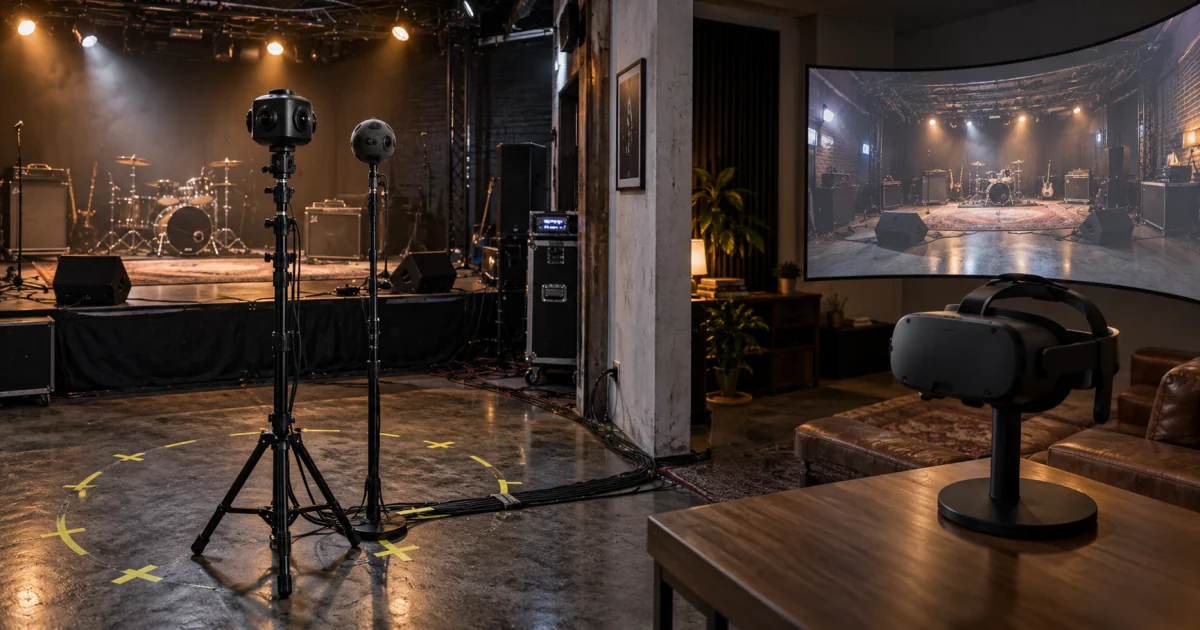
A stereoscopic 360 camera and ambisonic microphone in a fictional concert room beside a headset review station showing the same room

AI-generated editorial explanation of a fictional capture-to-playback workflow. It is not a VPORT production, product interface, partner venue, or documentary test.

Awakenings sells out two months before the lineup drops. Tomorrowland's 400,000 wristbands go in a day against 233 million people who want to be there. The math does not close. It never has.

VR concerts are the answer to that math. Not a consolation prize, not a preview mode, not footage you squint at on a phone. A spatial recording of the actual room, captured in 360 degrees, played back in a headset that puts you inside the frame. The crowd behind you, the booth ahead of you, the bass moving through a space that feels like a space.

Here is how the format works, what it requires, and how to teleport into a set from wherever you are.

Best VR Headsets for Watching Concerts in 2026: Apple Vision Pro vs Meta Quest 3 vs PC VR

· 7 min read

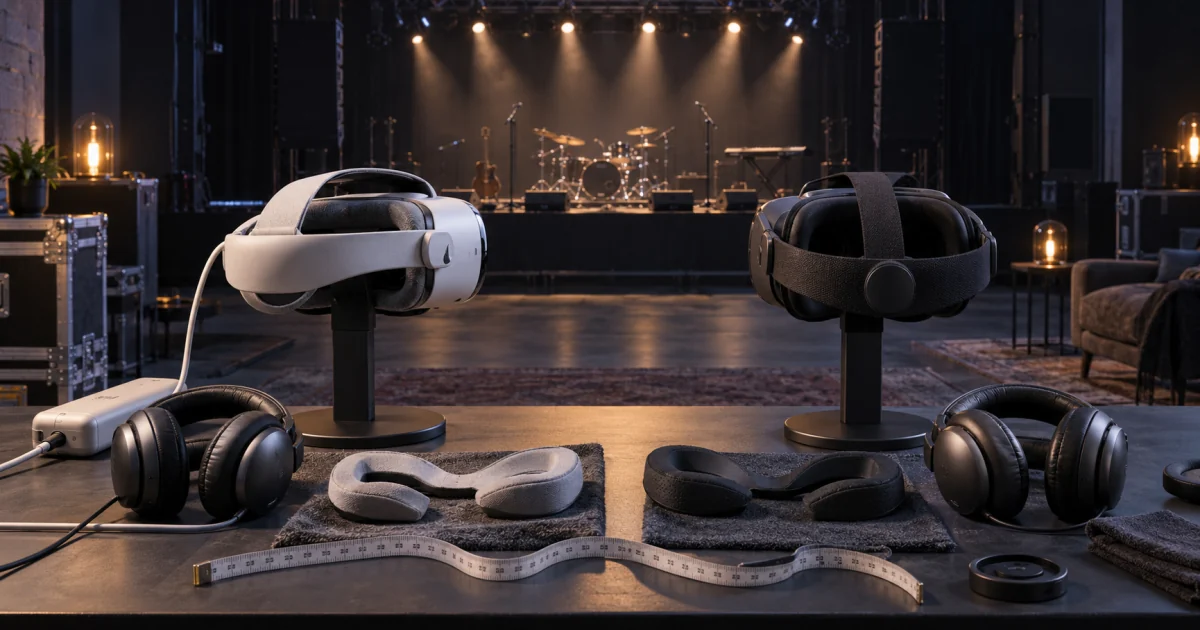
Two unbranded VR headset designs with comfort pads and headphones compared against the same fictional concert stage

AI-generated editorial comparison of fictional unbranded hardware. It does not depict a product test, a real venue, a VPORT interface, or a partnership.

Tomorrowland drew 233 million livestream views in 2026 against 400,000 physical tickets, according to IQ Magazine. That ratio is the whole argument for spatial concert platforms in one line. The room was full. The demand was not close. If you are part of the 233 million who could not get a wristband, you are going to watch that music somewhere. The question is what delivers something worth watching.

Three headset categories are in the conversation right now: Apple Vision Pro, Meta Quest 3, and PC VR rigs. Each has a real case to make. Each has a real limitation that marketing tends to skip past. This post gives you the honest version, written from inside a platform that has built this experience from scratch.

How to Watch Your First Concert on Apple Vision Pro: The 2026 Beginner's Guide

· 17 min read
CPO

The first sixty seconds inside a VPORT show will ruin flat video for you forever. That is not hyperbole. It is a warning. You put on Apple Vision Pro, you open the app, you tap a show - and then you are standing inside the room. The bass is in your chest. The lights are above you. And there is no screen. There is just... the venue.

Amsterdam Electronic Music Venues: Why the Room Matters in Spatial Video

· 5 min read
CEO

Amsterdam's electronic music identity is tied to its rooms. A circular former gasworks, an industrial shipyard, a basement under a waterfront tower, and temporary spaces across the city can each make the same track feel different.

That is why Amsterdam is an interesting subject for spatial video. The format can preserve more than a view of the performer. It can record how architecture, lighting, audience movement, and sound work together inside a venue.

Awakenings Festival 2026: What Outdoor Techno Teaches Us About Spatial Video

· 5 min read
CEO

Awakenings Festival 2026 took place in Hilvarenbeek from July 10 through 12. The official event page listed the three-day festival as sold out and published a program spread across multiple outdoor areas.

That combination makes Awakenings a useful case study for spatial video. An open field, a large crowd, daylight, multiple stages, and architecture built to be seen from many angles all create information that a single camera frame cannot fully preserve.

Beyond the Festival: Why Club Nights and Warehouse Sets Belong in 360

· 5 min read
CEO

Picture a converted warehouse late at night. The room is compact, the lighting is minimal, and the DJ is close to the dance floor. It is a different experience from watching a distant festival stage. That physical density and directness deserve a larger place in the conversation about virtual reality music events.

We have been thinking about this for a while at VPORT. Early conversations around spatial video and 360 concerts often focused on festivals, and the reasons make sense. Festivals are visible. They have recognizable names. The main stage provides a clear camera position and a sightline that translates to a headset without much explanation. Clubs offer another side of electronic music: smaller rooms, longer-form programming, local scenes, and the relationship between a venue and the people who return to it.

Built for Presence: Afro House and Tech House in Immersive Video

· 6 min read
CEO

Picture a fictional open-air room at blue hour. The booth is visible, but it is not the only thing worth watching. A percussion pattern moves through the mix while the crowd forms smaller scenes across the floor. The interesting question for an immersive recording is not whether one genre is "better for VR." It is which details make a particular set feel like itself, and whether the production preserves them.

Afro house and tech house can both reward wide room coverage, long-form editing, and spatially authored sound. They do not reward those choices in exactly the same way. Their labels also cover broad, changing scenes, so this is a production guide rather than a claim that every track or event follows one formula.