vport

20 posts tagged with "Nightlife"

Club culture, dance floors, and the global nightlife scene

View All Tags

London Electronic Music Clubs: What Three Rooms Teach Spatial Video

· 6 min read

fabric's current accessibility guide describes a historic, multi-level building with three main rooms, corridors, stairs, narrow routes, low light and high crowd density. Room One contains the main dancefloor. Room Two is reached by a steep ramp. Room Three is reached by stairs and has no lift access. For a capture crew, that is not one club with three playlists. It is three routing, sightline and equipment-placement problems under one roof.

Room One adds a physical variable. fabric says its haptic floor, rooted in the original Bodysonic system installed when the venue opened in 1999, now uses 36 moving-magnet units to turn low frequencies into tactile feedback. A microphone can record the sound in the room, but it cannot reproduce what that floor delivers through a viewer's feet. That gap is exactly why the room matters as much as the camera.
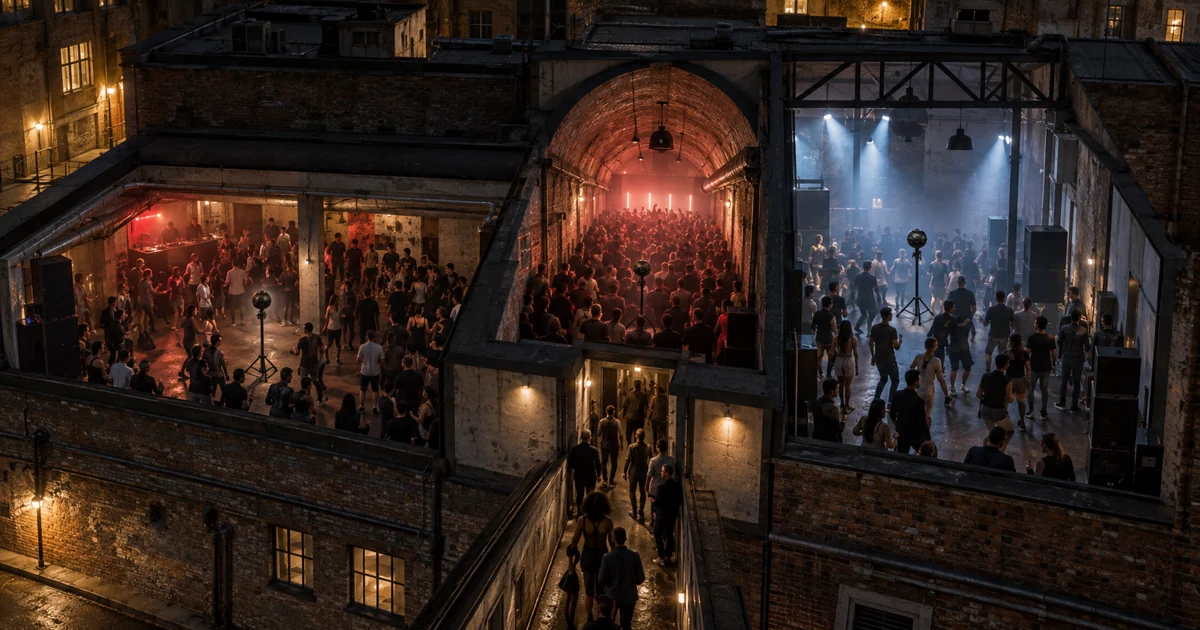
Cutaway of a fictional three-room London club showing a low basement, a narrow brick vault, a tall warehouse room, three spatial-camera positions and the corridor between them

AI-generated editorial image of a fictional multi-room venue. It does not depict fabric, another real London venue, an event, an artist, a VPORT production or a product interface.
Berlin Techno Clubs: A Spatial Video Fan Guide

· 5 min read
CEO

Berlin's techno culture is larger than a list of club names. The German Commission for UNESCO describes it as a living cultural practice built around music, dance events, fashion, technology, and community. Its 2024 recognition belongs to Germany's nationwide inventory of intangible cultural heritage. It is not a UNESCO World Heritage designation for particular buildings.

The rooms still matter. A former power station, a compact basement, and an outdoor area produce different sightlines, movement patterns, and recording constraints. This guide helps fans read those differences and helps production teams identify the evidence they would need before proposing a spatial-video shoot. It does not claim that VPORT has content, a relationship, or recording access at any venue named here.

Barcelona Electronic Music: A 2026 Nightlife Guide for Spatial Video Fans

· 5 min read
VPORT Team

Barcelona's electronic-music map is useful because it puts very different room types in one city. Razzmatazz publishes club programs across several numbered rooms. Sala Apolo runs electronic nights through Nitsa and Astin in distinct halls. Macarena operates at a much smaller scale near La Rambla. The 2026 edition of Sónar added another comparison point by combining open-air and covered stages at Fira Gran Via.

For a fan, those differences shape the night. For a production team, they change the scouting questions: where can a camera stand, what does the microphone hear there, and what permissions are actually available? This is a public planning guide, not a concert listing or partnership announcement. VPORT has no confirmed production, catalogue title, venue relationship, or recording access tied to the places named here.

Berlin Electronic Music Venues: A Verification Guide

· 7 min read
VPORT Team

Berlin's electronic music culture deserves more than a recycled ranking of famous doors. In 2024, technoculture in Berlin entered Germany's nationwide inventory of intangible cultural heritage. That is a recognition of a living culture built around music, dance events, fashion, technology, and community. It is not a UNESCO World Heritage designation, and it does not make every venue, listing, or travel claim timeless.

For a useful Berlin electronic music guide, start with the night you want to hear. Then verify the room, entry conditions, recording rules, and playback format with sources that can answer for them.

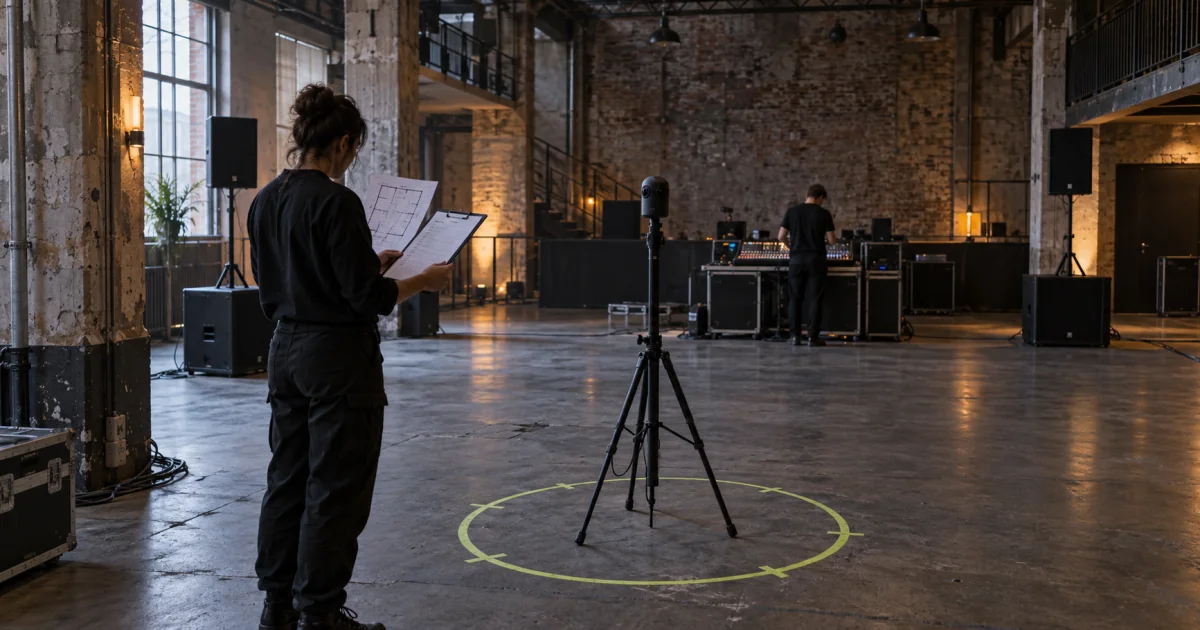
Fictional editorial soundcheck in an industrial club, with a 360 camera inside a taped placement circle while a venue operator checks a floor plan and permissions sheet

Fictional AI-generated editorial image. It does not depict a real Berlin venue, event, artist, or VPORT capture.

Ibiza 2026 Electronic Music: A Current Club-Night Planner

· 6 min read

The Ibiza 2026 electronic music season is still active on September 5, but it is not one event with one timetable. It is a changing set of club calendars, room lineups, ticket conditions, and transport decisions. The useful question is not simply, “What is on in Ibiza?” It is, “Which official listing matches my date, room preference, budget, and route home?”

This guide gives you a current verification path. It uses live venue pages as sources, does not reproduce a full season calendar, and does not imply that any Ibiza event is available on VPORT.

Amsterdam Club Spatial Audio: A Four-Position Room Test

· 7 min read

Amsterdam club spatial audio starts with a deceptively simple question: where does this room sound like itself?

A clean feed from the mixing desk can preserve the music and still erase the venue. A room microphone can preserve atmosphere and still produce a vague, unstable sound field. The useful answer is not to choose one source. It is to test how the program, room, and audience relate at several positions before the recording plan is locked.

This guide uses a four-position room test for that decision. It is a production-planning method, not a claim about a particular Amsterdam venue or an announcement that its events are available on VPORT.

Immersive Concerts in Tokyo: A Spatial Capture Planning Guide

· 6 min read
CEO

Tokyo after dark offers dense streets, small rooms, large stages, careful lighting, and audiences gathered around many kinds of music. Those qualities can make the city compelling material for immersive concerts, but they do not make a production automatic. A credible spatial recording starts with a specific event, a suitable room, a clear technical plan, and permission from everyone responsible for the performance and venue.

This guide explains what a production team should verify before describing a Tokyo concert as a spatial experience. It does not announce a VPORT capture, partnership, or content release.

Beyond the Festival: Why Club Nights and Warehouse Sets Belong in 360

· 5 min read
CEO

Picture a converted warehouse late at night. The room is compact, the lighting is minimal, and the DJ is close to the dance floor. It is a different experience from watching a distant festival stage. That physical density and directness deserve a larger place in the conversation about virtual reality music events.

We have been thinking about this for a while at VPORT. Early conversations around spatial video and 360 concerts often focused on festivals, and the reasons make sense. Festivals are visible. They have recognizable names. The main stage provides a clear camera position and a sightline that translates to a headset without much explanation. Clubs offer another side of electronic music: smaller rooms, longer-form programming, local scenes, and the relationship between a venue and the people who return to it.

Built for Presence: Afro House and Tech House in Immersive Video

· 6 min read
CEO

Picture a fictional open-air room at blue hour. The booth is visible, but it is not the only thing worth watching. A percussion pattern moves through the mix while the crowd forms smaller scenes across the floor. The interesting question for an immersive recording is not whether one genre is "better for VR." It is which details make a particular set feel like itself, and whether the production preserves them.

Afro house and tech house can both reward wide room coverage, long-form editing, and spatially authored sound. They do not reward those choices in exactly the same way. Their labels also cover broad, changing scenes, so this is a production guide rather than a claim that every track or event follows one formula.